Custom Aluminum Busbars
Celestix Industries supports custom aluminum busbar fabrication for OEMs, electrical equipment manufacturers, sourcing teams, and engineering-driven buyers. Each aluminum busbar can be manufactured to customer drawings, samples, and technical requirements for power distribution, conversion, switching, battery systems, and industrial electrical equipment.
As an aluminum electrical conductor, a busbar provides a practical combination of conductivity and low weight. Compared with copper, aluminum requires a larger busbar cross-sectional area to achieve equivalent resistance, but its substantially lower density can reduce conductor and assembly mass.
Material grade, conductor geometry, contact surfaces, joints, thermal conditions, mechanical loading, and surface treatment all affect the finished conductor. Custom designs can range from a flat aluminum busbar or solid conductor with connection holes to formed bars, stacked conductors, aluminum busbar profiles, extrusions, and application-specific interconnects.
Key Features
An aluminum busbar can be engineered around the electrical and mechanical requirements of the finished assembly rather than treated as a generic conductive aluminum bar or current distribution bar.
Typical characteristics and options include:
Custom lengths, widths, thicknesses, and profiles
Flat, bent, formed, stacked, solid, hollow, or extruded configurations
Aluminum busbar strip and plate configurations
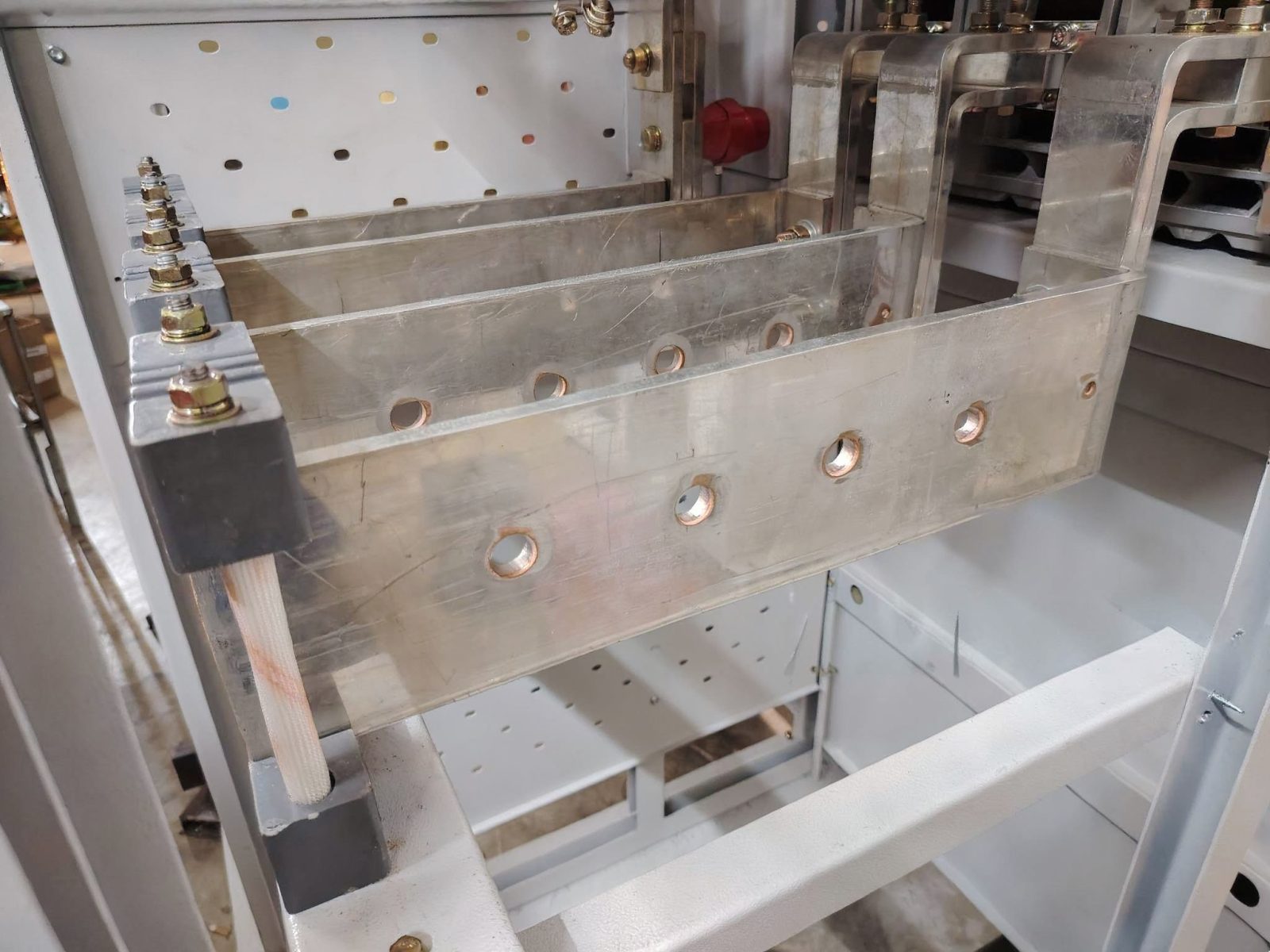
Custom holes, slots, connection pads, and mounting features
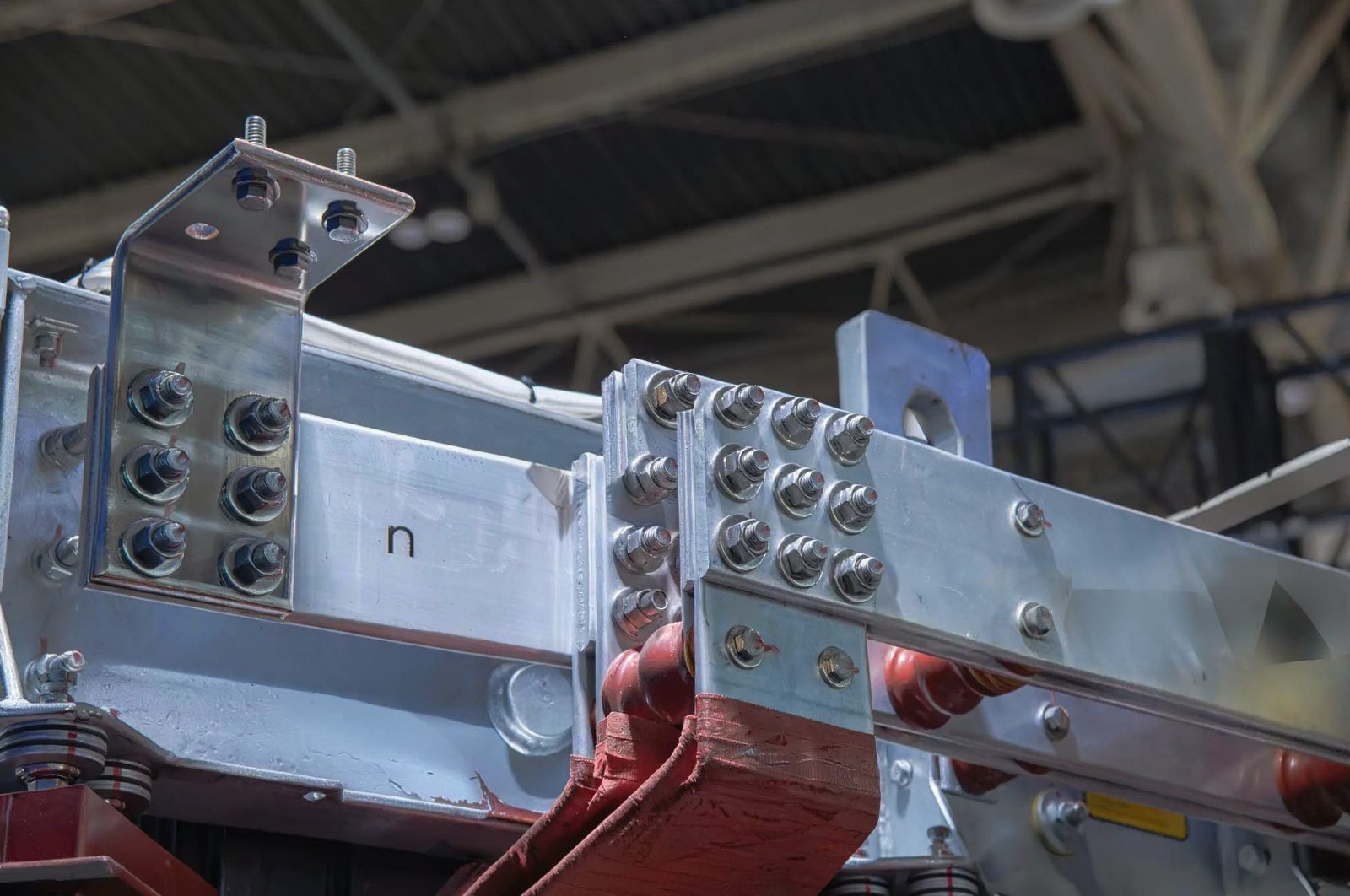
Aluminum busbars with custom hole patterns
Aluminum-to-aluminum and aluminum-to-copper busbar connections
Bare or selectively finished surfaces
Tin-plated contact areas where specified
Defined contact-pad geometry and flatness
Custom bend geometry
Insulated or selectively coated areas
Aluminum busbars manufactured to drawing or specification
Drawing-controlled parts for repeat OEM production
The final specification should consider aluminum busbar resistance, voltage drop, temperature rise, mechanical strength, joint performance, installation space, and applicable equipment requirements rather than conductor dimensions alone.
Custom Options
A custom aluminum busbar manufacturer works from the electrical layout and physical architecture of the customer's equipment. Features such as hole position, contact-pad flatness, bend location, plating masks, and transition geometry can directly affect assembly and electrical performance.
Depending on the design, custom options may include:
Straight or multi-bend conductors
Offset and twist geometry
Multiple terminal and mounting holes
Slotted connections
Wide contact pads
Reduced or enlarged conductor sections
Stacked parallel conductors
Aluminum-to-copper transitions
Custom aluminum busbar extrusion
Tubular or hollow conductors
Insulation or protective coverings
Selective aluminum busbar plating
Masked electrical contact areas
Identification or marking requirements
For repeat production, drawings should clearly distinguish critical electrical contact features from general dimensional features.
Manufacturing
Aluminum busbar fabrication can involve several manufacturing operations depending on the busbar material, alloy, temper, cross-section, geometry, connection features, and production requirements.
Relevant processes can include:
Aluminum busbar cutting
Sawing or shearing
Laser or waterjet cutting
Aluminum busbar punching
Aluminum busbar drilling
Press-brake bending
Offset or twist forming
Roll bending
Aluminum busbar stamping
Aluminum busbar machining
Extrusion for custom profiles
Joining where specified
Aluminum busbar deburring and edge preparation
Surface preparation
Plating or protective finishing
Aluminum busbar cutting, drilling, and bending services require particular attention around holes, bends, and electrical contact areas. Punching and drilling can introduce burrs, hole distortion, breakout, scratching, chips, and positional variation. Aluminum busbar bending adds considerations involving alloy, temper, thickness, radius, material direction, springback, tooling, and edge condition.
These details matter because holes and cutouts reduce the available electrical cross-section and can create current crowding and mechanical stress concentrations. The manufacturing route should therefore be selected around the complete busbar design rather than an individual fabrication operation.
Materials
Aluminum busbar material should be specified by alloy and temper rather than treating "aluminum" as a complete material designation. The aluminum bus bar alloy affects electrical conductivity, mechanical strength, forming behavior, thermal performance, and manufacturing requirements.
Two important material families for electrical bus conductors are 1350 aluminum busbar material and 6101 aluminum busbar material.
1350 Aluminum
1350 is a high-purity electrical conductor aluminum selected primarily for conductivity. Often described as 1350 electrical grade aluminum, EC grade aluminum, or EC grade aluminum busbar material, it is commonly associated with flat busbars, transformer connections, switchboards, bus duct, and other high-current conductor applications.
Because conductivity is prioritized, mechanical support, bolt-bearing loads, vibration, short-circuit forces, and forming requirements should also be evaluated.
6101 Aluminum
6101 aluminum bus bar material is an aluminum-magnesium-silicon alloy developed to balance electrical conductivity with greater mechanical strength. Its extrusion characteristics make it particularly relevant to rigid bus structures, hollow conductors, channels, angles, and custom profiles.
Temper is part of the material specification. Requirements may call for 6101-T6 aluminum busbar, 6101-T61 aluminum busbar, or another specified condition depending on the required balance of conductivity, strength, and fabrication characteristics.
Other alloys may be used for particular designs. 6061 aluminum busbar and 6063 aluminum busbar material, for example, may be considered where their structural, machining, extrusion, or other properties fit the application. They should not automatically be treated as electrically equivalent to 1350 or 6101.
Any proposed aluminum busbar material grade should therefore be reviewed for conductivity, temper, mechanical properties, heat rise, forming requirements, joining method, and governing specifications before substitution.
Finishes
Surface condition is particularly important because aluminum naturally develops an oxide film. This protects the underlying material in many environments but is substantially less electrically conductive than metallic aluminum. Contact surfaces and aluminum busbar joint design therefore require deliberate specification.
Depending on the application, surface requirements may include:
Bare aluminum
Tin-plated aluminum busbar contact areas
Silver-plated contact areas
Nickel plating for appropriate interfaces
Selective plating
Paint or powder coating on non-contact areas
Electrical insulation systems
Defined masking around contact surfaces
A tin plated aluminum bus bar may be specified to improve contact compatibility and can be useful in appropriately engineered aluminum-to-copper connections. Silver plating may be used for high-current or separable contacts where required. Nickel can serve as a barrier or as part of another specified coating system.
Anodizing requires particular caution on a current-carrying interface because anodized aluminum is intentionally electrically insulating. Electrical contact areas therefore require appropriate masking or another design solution.
Configurations
Custom aluminum busbars can take several forms depending on current requirements, packaging space, mechanical loading, and equipment architecture:
Flat aluminum busbar
Solid aluminum busbar
Aluminum busbar strip
Aluminum busbar plate
Bent and formed busbars
Stacked parallel bars
Laminated busbars
Flexible conductor constructions
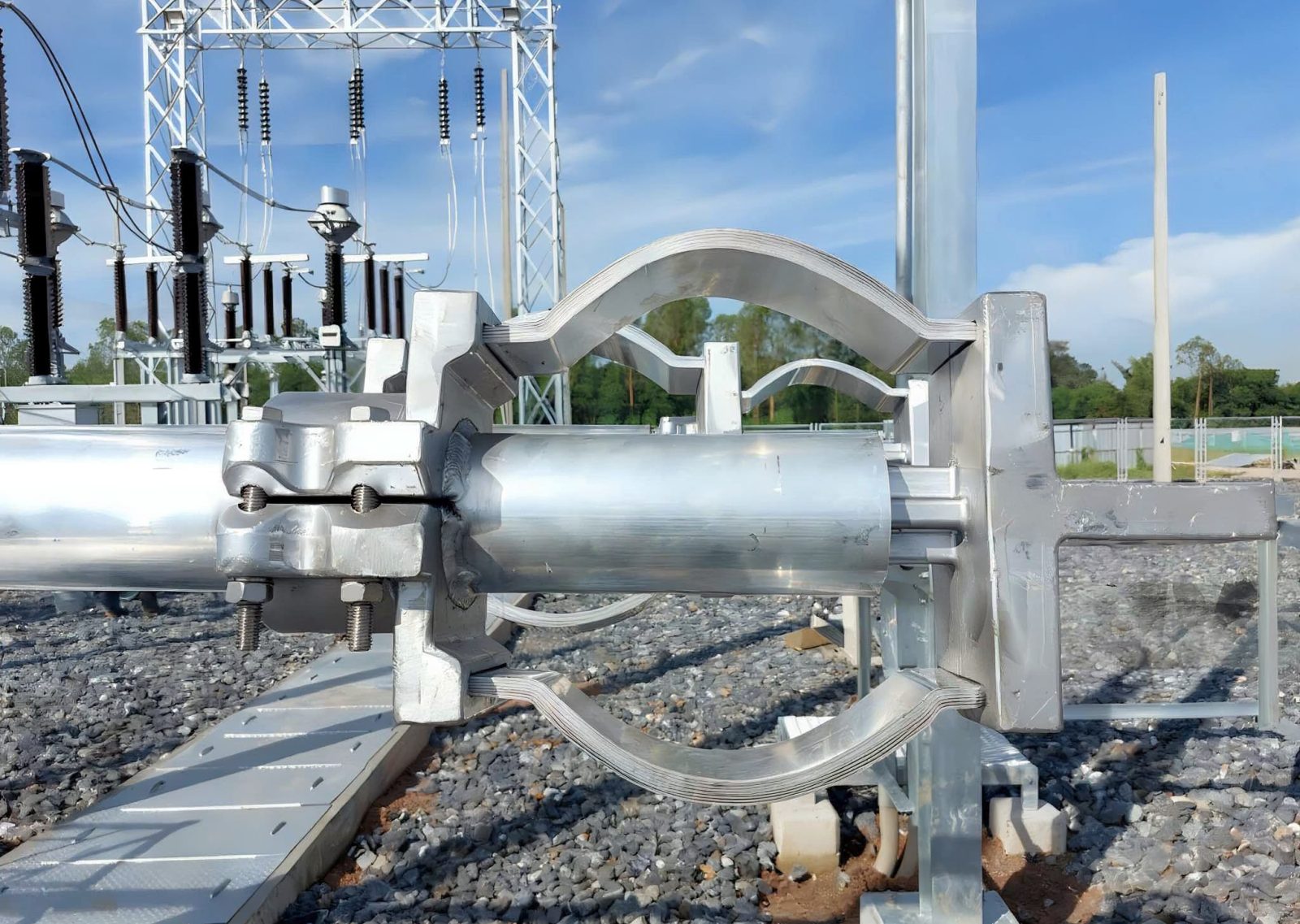
Tubular and hollow conductors
Extruded aluminum busbar profiles
Aluminum-to-copper transition components
Application-specific battery interconnects
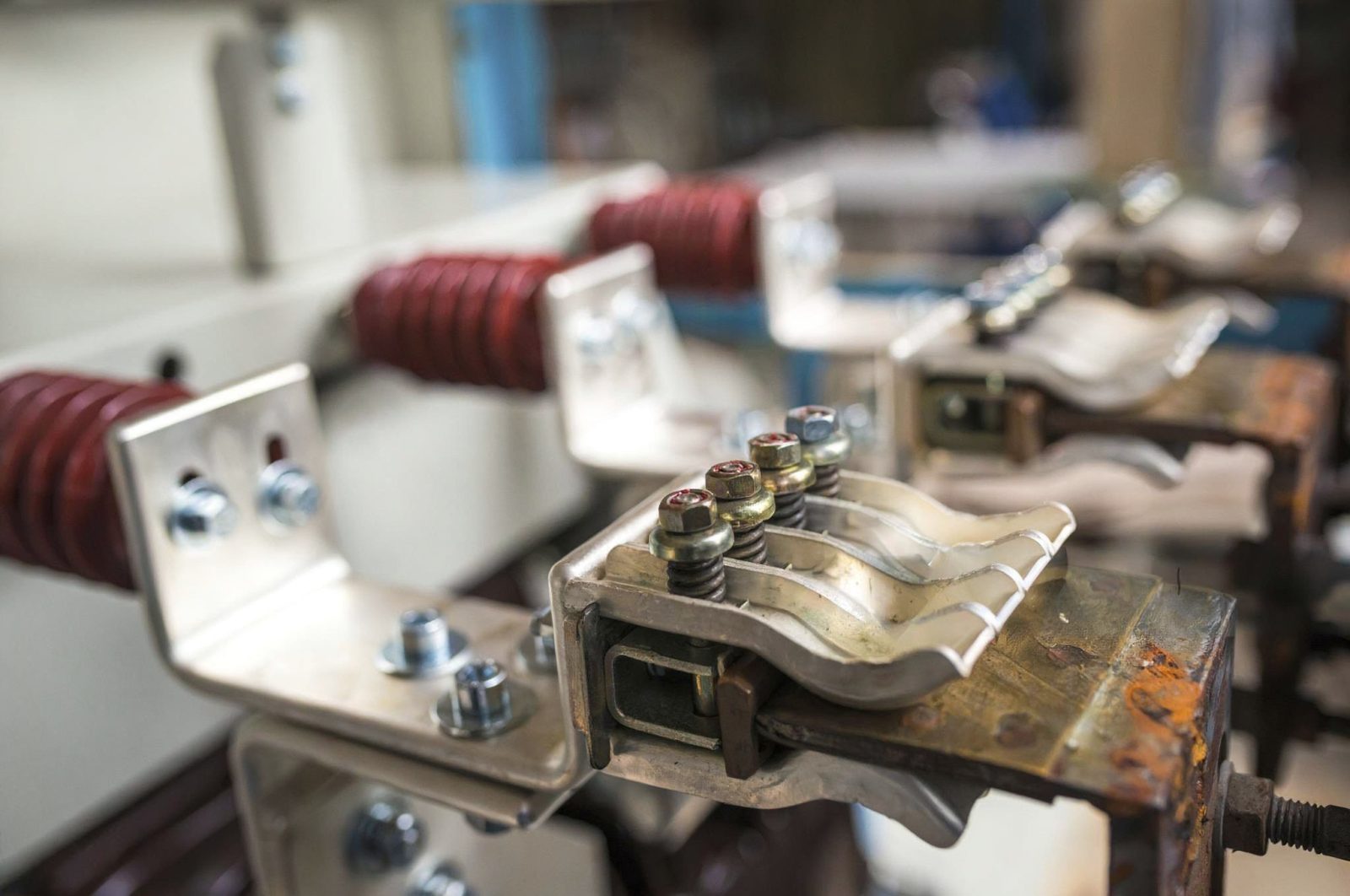
Flat and solid conductors provide straightforward manufacturing and large connection surfaces. Stacked bars can increase conductor area and cooling surface but require attention to current sharing, joint design, path symmetry, and airflow.
Laminated constructions are relevant to power electronics where close conductor spacing can reduce loop inductance. Aluminum busbar extrusion can also create profiles incorporating ribs, mounting geometry, alignment features, bolt channels, or cooling-related geometry where required.
Applications
Custom aluminum busbars are used where substantial electrical current needs to be collected, distributed, switched, converted, or interconnected while controlling conductor mass and system geometry.
Typical applications include:
Aluminum busbars for switchgear
Aluminum busbars for switchboards and panelboards
Aluminum busbars for electrical panels
Aluminum busbars for industrial power distribution
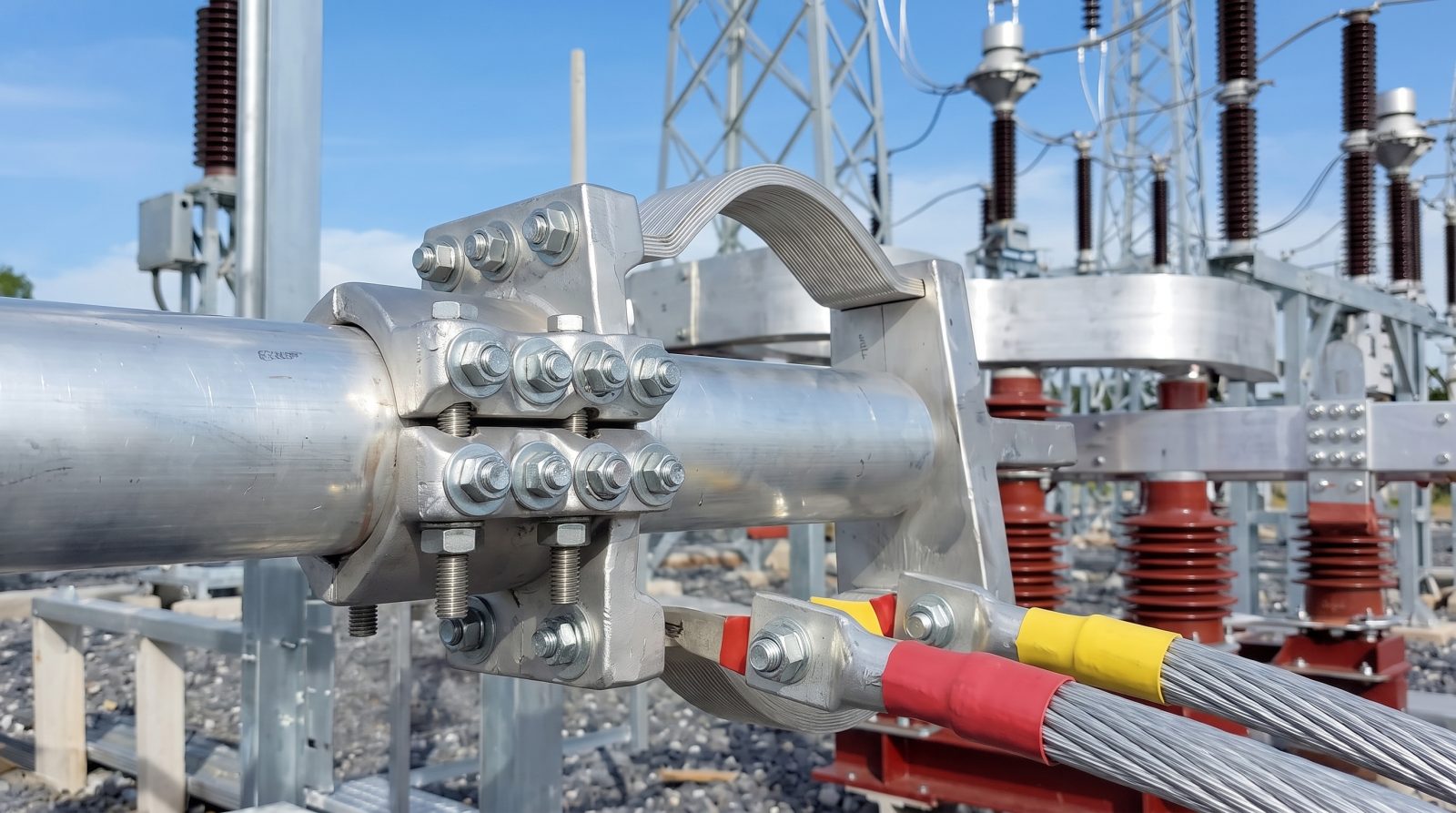
Aluminum busbars for transformers and substations
Busway and busbar trunking
Motor-control centers
Rectifiers and power converters
Aluminum busbars for inverters
Aluminum busbars for battery packs
Aluminum busbars for battery energy storage systems
Aluminum busbars for EV systems and EV batteries
Aluminum busbars for charging systems
Aluminum busbars for renewable-energy equipment
Aluminum busbars for solar power systems
Data-center power distribution
High-current DC equipment
Power-electronic assemblies
Application priorities vary. A busbar manufacturer for power distribution equipment may need to work around temperature rise, short-circuit forces, clearances, insulation, and joint requirements. Aluminum busbar fabrication for EV battery packs may place greater emphasis on conductor mass, terminal compatibility, thermal behavior, joining, packaging space, and aluminum-to-copper transitions.
Power-electronic applications can require additional attention to conductor geometry, stray inductance, dielectric integrity, and current-path symmetry.
Design Factors
Important aluminum busbar design considerations extend beyond current rating and outside dimensions. Electrical, thermal, mechanical, and interface requirements interact throughout the conductor and its connections.
Electrical sizing. Aluminum busbar conductivity, conductor length, and effective cross-sectional area determine bulk resistance. Increasing the cross-sectional area reduces resistance, but the finished assembly also contains terminal and aluminum busbar contact resistance. Under AC conditions, skin and proximity effects may introduce additional losses.
Ampacity. Aluminum busbar ampacity or aluminum busbar current carrying capacity should not be treated as a universal value based only on conductor width and thickness. Continuous and peak current, AC or DC operation, frequency, duty cycle, ambient conditions, conductor orientation, ventilation, spacing, insulation, joint losses, and permitted temperature rise can all affect the result. An aluminum busbar calculation should therefore reflect the actual operating conditions and assembly.
Thermal performance. Heat can originate from conductor resistance, joints, terminals, nearby devices, harmonics, and AC effects. Bolted overlaps, transition joints, narrow sections, bends, hole patterns, and restricted-airflow areas deserve particular attention as potential hot spots.
Mechanical loading. Busbars may experience their own weight, cable and terminal loads, vibration, thermal movement, transportation loads, and electromagnetic forces during short-circuit events. Aluminum's relatively low elastic modulus and higher thermal expansion compared with copper or steel can influence support and joint design.
Bending. Alloy, temper, thickness, bend radius, material direction, edge condition, tooling, and springback affect formability. A bend radius suitable for one aluminum alloy or temper should not automatically be applied to another.
Joint design. Aluminum joints require particular attention because oxide condition, true contact area, surface flatness, contact pressure, plating, bolt pattern, washers, joint compound, temperature, and environmental exposure can influence contact resistance. Specified bolt torque alone does not guarantee a reliable electrical joint.
Aluminum-to-copper connections. Dissimilar-metal interfaces require deliberate engineering. Depending on the application, solutions can include compatible plating, bimetallic transition components, copper-clad aluminum, sealed or inhibited joints, or suitable transition lugs. Environmental exposure and galvanic-corrosion risk should also be considered.
Quality Control
Quality requirements should focus on features affecting electrical contact, assembly, mechanical support, and production repeatability rather than appearance alone.
Depending on the drawing and customer requirements, inspection may address:
Aluminum alloy and temper
Material dimensions
Straightness and flatness
Surface condition
Hole and slot dimensions and positions
Bend geometry
Contact-pad dimensions and flatness
Burr and edge condition
Plating coverage and thickness
Masking boundaries
Coating condition
Part identification
Packaging condition
Required material or inspection documentation
Where specified, verification may also involve conductivity, bulk resistance, joint resistance, voltage drop, coating thickness, adhesion, roughness, or contact-resistance testing. Exact inspection and testing requirements should be defined by the drawing, specification, and qualification plan rather than assumed for every busbar.
Packaging should protect contact pads, plated surfaces, and conductor geometry from scratches, dents, contamination, abrasion, and bending during handling and shipment.
RFQ Information
For an aluminum busbar RFQ, provide the information needed to establish material, geometry, finish, inspection requirements, and production quantity.
Useful RFQ inputs include:
2D drawing and 3D CAD model
Aluminum alloy and temper
Dimensions and critical tolerances
Conductivity or electrical requirements
Contact-surface requirements
Plating, masking, or insulation requirements
Bend and transition details
Inspection and documentation requirements
Prototype and production quantities
Avoid specifying only "aluminum." Alloy and temper can affect conductivity, strength, formability, joint behavior, and thermal performance.
OEM Manufacturing
Celestix Industries supports aluminum busbar contract manufacturing for OEMs, electrical equipment companies, sourcing teams, and engineering-driven buyers requiring aluminum busbars made to drawing or technical specification.
For new components, the manufacturing package should establish material, temper, geometry, contact interfaces, finish, critical dimensions, inspection requirements, and packaging expectations. For repeat aluminum busbar production, controlled drawings and revision information help maintain consistency across production batches.
For buyers evaluating an aluminum busbar manufacturer or aluminum busbar supplier, the RFQ should communicate more than the conductor's outside dimensions. Material grade, contact interfaces, hole patterns, surface treatment, critical dimensions, and application requirements help define whether the manufactured component will fit and provide the intended electrical interface.
Celestix supports custom manufacturing programs for buyers seeking an India-based custom aluminum busbar manufacturer for OEMs and international supply requirements. Send your drawing, material specification, quantity, finish, and applicable inspection requirements for review.
Start Your Project
Share your drawing or sample. We’ll engineer the rest.
From wiring harnesses and cable assemblies to insert plugs, sheet metal and injection molded parts — our team reviews your requirement and responds with the right approach, applicable certifications, and a clear quote.